The 2027 Medicare Advantage landscape is shifting, and the stakes for quality performance have never been higher. By proposing to reduce administrative and process-heavy measures, the Centers for Medicare & Medicaid Services (CMS) is effectively removing the "safety net" many plans have relied on. This strategic pivot places more weight on what truly matters: clinical outcomes and the member experience. For health plans, this means HEDIS scores will become a key driver of Star Ratings.
At the same time, the CMS Health Equity Index (HEI) reward signals a new era of accountability. CMS is now leveraging HEDIS and CAHPS-aligned data to reward plans that deliver high-quality care to members who face risks due to social determinants of health. This makes sure that quality care isn't a privilege of geography or background, but a standard for everyone.
For health plans, achieving sustainable growth now depends on a plan’s ability to bridge the gap between abstract data and human connection. Fortunately, HEDIS measures can act as a roadmap to enhanced member satisfaction.
Why do HEDIS measures matter?
When it comes to modern value-based healthcare, the Healthcare Effectiveness Data and Information Set (HEDIS) serves as the industry’s most vital yardstick. Developed and maintained by the National Committee for Quality Assurance (NCQA), these measures provide a standardized way to compare the performance of health plans across clinical quality and patient experience.
But for top-performing health plans, HEDIS is more than a regulatory requirement or a data-reporting exercise. It’s a strategic compass. By tracking performance across multiple distinct measures, ranging from medication adherence and chronic condition management to preventative screenings, health plans gain a transparent view into the efficacy of their care delivery models. High HEDIS scores are a signal to the market, to regulators, and to members that a plan isn’t just providing coverage, but is actively facilitating better health outcomes.
Ultimately, these measures are crucial because they transition the industry from volume to value. They make sure that quality is a measurable, repeatable result that can be benchmarked and improved year over year.
The link between HEDIS measures and member satisfaction
While HEDIS is often viewed through a clinical lens, its impact on health plan member satisfaction is significant. There’s a common misconception that clinical metrics and the patient experience exist in silos; in reality, they are two sides of the same coin.
When a health plan performs well on HEDIS measures, specifically those involving outreach, follow-up care, and medication therapy management, the member experiences a more connected healthcare journey. For example, a proactive pharmacist outreach for a missed refill or a personalized consultation after a new prescription doesn’t just close a care gap; it builds trust. Members feel supported, informed, and confident in their plan.

Leveraging pharmacy data to find care gaps
For many health plans, pharmacy data is the most actionable clinical data source available. Unlike medical claims, which can suffer from a lag of weeks or even months, pharmacy data provides a near real-time window into member behavior. When a member fails to refill a maintenance medication, it’s a leading indicator of a potential care gap that will eventually impact HEDIS scores.
By shifting from a reactive approach to a data-first strategy, health plans can address gaps before they turn into significant issues. This proactive identification is the secret to top-tier plans aiming for sustainable growth.
Strategic use of pharmacy data allows plans to pinpoint exactly where clinical interventions are needed most:
- Medication non-adherence patterns: Identifying members who are consistently late on refills for chronic conditions like hypertension or diabetes, directly impacting quality measures related to medication adherence.
- Therapy gaps: Spotting members with specific diagnoses who are missing guideline-recommended therapies, such as those needing a statin according to SUPD (Statin Use in Persons with Diabetes) criteria.
- Transition of care failures: Flagging members who have not had a required follow-up after a recent hospitalization or a change in their medication regimen.
- Polypharmacy risks: Detecting members taking multiple medications that may have contraindications or increased risks for adverse events, which often lead to avoidable ER visits.
By reviewing these data points, health plans can move away from reactive outreach and toward high-impact clinical interventions that improve both the HEDIS score and the overall patient experience.
3 actionable strategies to improve HEDIS outcomes
To close care gaps, health plans need to focus on the relevance of the conversation, especially during a time when members are flooded with generic notifications and automated robocalls. The plans that win are those that treat every touchpoint as a clinical opportunity.
By pivoting toward a personalized engagement strategy, plans can improve patient satisfaction while maintaining strong HEDIS scores.
1. Proactive vs. passive care gap closure
The traditional model of care gap closure is often passive – waiting for a claim to trigger an alert or for a member to visit their primary care physician. Passive closure is a trailing indicator; it tells you what didn’t happen in the past.
Alternatively, proactive closure, driven by frequent pharmacy data reviews, allows for intervention before the gap even opens. For example, rather than waiting for a non-adherence flag at the 90-day mark, a proactive outreach strategy identifies a member who missed their 30-day refill by just forty-eight hours. This early-warning system transforms a potential HEDIS failure into a patient experience success story, as the member feels the plan is actively looking out for their well-being.
2. Optimize high-impact quality measures
Not all quality measures are created equal in terms of their impact on a plan’s financial health and reputation. To achieve sustainable growth, health plans must prioritize key measures with the highest clinical volatility. Those include:
- Medication adherence: Personalized outreach that uncovers the reason for non-adherence, be it cost, side effects, or simple forgetfulness, is far more effective than a generic reminder.
- Transitions of care: This high-impact period is a critical window for HEDIS. Ensuring a member has a medication reconciliation within 30 days of discharge is essential for preventing readmissions and stabilizing the patient experience.
- Preventative screenings: Leveraging clinical conversations to educate members on the importance of screenings helps move the needle on long-term population health.
3. Incorporate scalable, high-quality clinical interventions
In the pharmacy industry, health plans often face a trade-off between scale and quality. It’s fairly easy to scale outreach, but that doesn’t guarantee behavioral change. Conversely, it is easy to provide high-quality care through a small in-house team, but that team can quickly become overwhelmed during peak seasons.
The most successful health plans are those that build a flexible capacity into their clinical care delivery models. This involves utilizing a workforce that can scale up or down based on current gap-closure needs without sacrificing the clinical depth of the interaction. When a member speaks to a clinical expert who has the time to listen and the data to provide specific answers, the result is a measurable boost in health plan member satisfaction and a more resilient HEDIS score.

How pharmacy technology supports HEDIS measures and member satisfaction
HEDIS scores are the ultimate indicator of organizational health, but achieving high marks requires more than just clinical accuracy. It requires a delivery model that can adjust with the demands of the modern healthcare consumer. At Aspen RxHealth, we help plans bridge the gap between abstract data and human connection, transforming quality reporting into a seamless, high-engagement experience.
Optimizing CAHPS surveys and member experience
The relationship between clinical quality and patient satisfaction is most evident in CAHPS surveys. While HEDIS measures what was done, CAHPS measures how the member felt about the process. Aspen RxHealth’s pharmacist-led model is designed to optimize both.
Our adaptive pharmacy SaaS and clinical solutions empower plans to achieve:
- 30% faster engagements: Our platform enables clinical consultations to be completed significantly faster than traditional models, improving efficiency without sacrificing quality.
- Reduced member abrasion: We bundle multiple clinical touchpoints, including Star Ratings measures, HEDIS scores, and chronic condition management, into a single, seamless interaction.
- Improved healthcare equity: By increasing access to nationwide remote pharmacists via the BeWell platform, we remove geographical barriers for members in rural areas or pharmacy deserts, ensuring high-quality care is accessible to all.
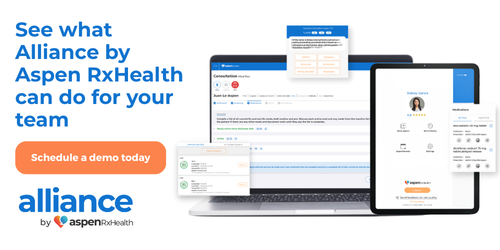
- Scalable care delivery: Through Alliance by Aspen RxHealth, internal teams can work independently or gain access to our nationwide pharmacist community to manage volume surges during peak seasons.
Turning HEDIS performance into sustainable growth
To ensure these efforts translate into growth, our comprehensive reporting tools provide actionable insights into member engagement, satisfaction, and performance metrics. With transparent reporting that highlights the tangible impact of our pharmacist-led engagements, your team gains total clarity on patient trust and program success.
By unifying sophisticated pharmacy SaaS with a deeply human approach, Aspen RxHealth ensures your HEDIS strategy is a catalyst for both clinical excellence and long-term member loyalty. To see Aspen RxHealth’s pharmacy solution in action, reach out today to schedule your demo!